Hydration for Young Athletes
By Sravan · October 17, 2026 · 6 min read
Health & Nutrition for Young Athletes · Part 3
Health & Nutrition for Young Athletes — Part 3
When children train, run, sweat and play, their bodies lose water.
If they do not replace enough of it, they may feel tired, slow, unfocused or simply “off” during training.
That is why hydration is not just about drinking water when a child feels thirsty.
For young athletes, it is about building a simple habit:
Drink before training → Sip during training → Rehydrate after training
Why Hydration Matters
Water helps the body:
- Regulate temperature
- Support concentration
- Transport nutrients
- Maintain energy during activity
- Recover after training
Even small changes in hydration can affect how a child feels during sport.
Sometimes poor training quality is not only about fitness or effort.
It may also be because the child started the session already under-hydrated.
How Much Water Do Kids Need?
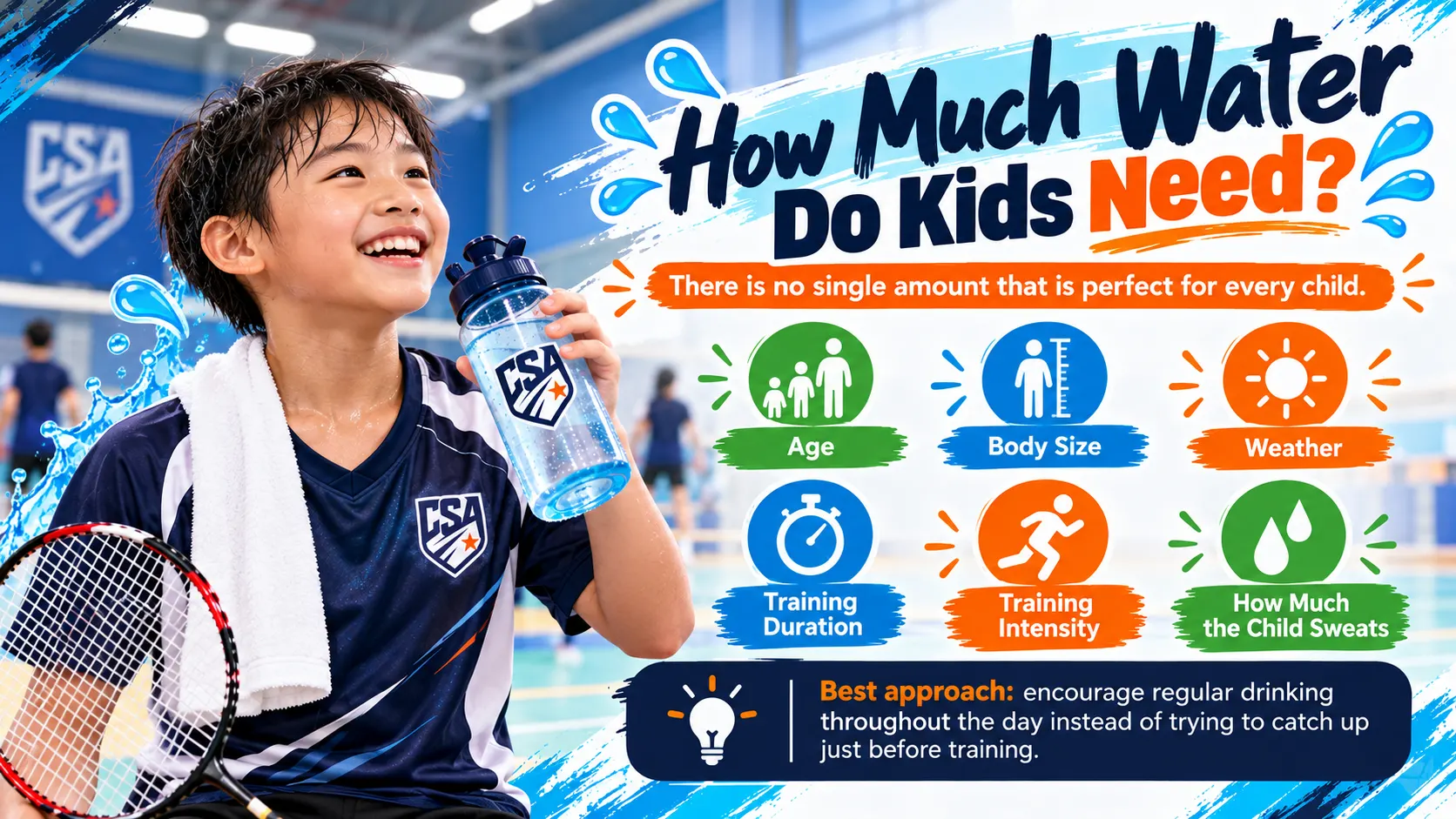
There is no single amount that is perfect for every child.
Water needs can change depending on:
- Age
- Body size
- Weather
- Training duration
- Training intensity
- How much the child sweats
The better approach is to encourage regular drinking throughout the day instead of trying to “catch up” just before training.
Explore Estimated Water Needs
Parents can use the:
CSA Water Intake Calculator
https://csa.club/health-calculators/water-intake
Use it as a general starting point. Children may need more fluids on hot, humid or harder training days.
Before Training
Children should not wait until practice starts to think about water.
Encourage them to drink regularly during the day and have some water before they step onto the court or field.
A simple question before leaving home can help:
“Do you have your water bottle?”
That small habit matters.
During Training
During training, children should have easy access to water and take regular sips.
They do not need to drink a huge amount at once.
Small, regular amounts are usually easier to tolerate.
For normal coaching sessions, water is often enough.
Coaches and parents should also be more attentive during hot or humid weather, when fluid losses can be higher.
After Training
After training, encourage children to drink again.
If the child has trained hard and sweated a lot, fluids after the session become especially important.
A simple post-training routine can be:
Water + Recovery Food + Rest
For example:
- Water + banana + curd
- Water + milk + fruit
- Water + normal dinner
- Water + sandwich + fruit
Hydration works best when it is part of the full recovery routine.
Signs a Child May Need More Fluids
Parents and coaches can watch for signs such as:
- Increased thirst
- Dry mouth
- Tiredness
- Headache
- Reduced concentration
- Feeling unusually slow
- Darker urine than usual
- Lower energy during training
These signs do not always mean dehydration, but they are useful reminders to check hydration habits.
A very simple everyday cue is urine colour.
Pale yellow usually suggests better hydration. Very dark urine can be a sign that more fluid may be needed.
Water or Sports Drink?
For most normal training sessions, children do not automatically need a sports drink.
Water should usually be the first choice.
Sports or electrolyte drinks may be more useful during situations such as:
- Long-duration training
- Very intense sessions
- Hot and humid conditions
- Heavy sweating
- Multiple matches in one day
They should not become an everyday replacement for water.
Many sports drinks also contain sugar, so they are better used for a reason rather than simply because a child is playing sport.
When Can Electrolytes Help?
Sweat contains not only water but also electrolytes, including sodium.
On longer or hotter training days, especially when a child sweats heavily, replacing electrolytes may sometimes be useful.
This can be more relevant during:
- Summer training
- Long tournament days
- Back-to-back matches
- Multiple training sessions
- Very high sweat loss
For normal daily sessions, regular meals plus water may already provide what many children need.
Hot-Weather Training
Hot weather changes hydration needs.
Children may sweat more and lose fluids faster.
On hot days:
- Encourage drinking before training
- Make sure the bottle is full
- Allow regular water breaks
- Watch for unusual tiredness or dizziness
- Rehydrate after training
- Avoid waiting until the child becomes extremely thirsty
The goal is not to force large amounts of water.
The goal is to make hydration regular and easy.
Tournament-Day Hydration
Tournament days are different from regular training.
A child may play multiple matches, wait between games and stay at the venue for several hours.
A simple routine can help:
Before the First Match
Drink water regularly and avoid starting the day dehydrated.
Between Matches
Take small sips regularly.
Do not wait until the next match starts.
After Matches
Rehydrate and combine fluids with a suitable snack or meal.
Tournament hydration is easier when parents carry:
- Water bottle
- Extra water
- Fruit
- Simple snacks
- Electrolyte option if the day is long, hot or very demanding
A Simple Rule Kids Can Remember
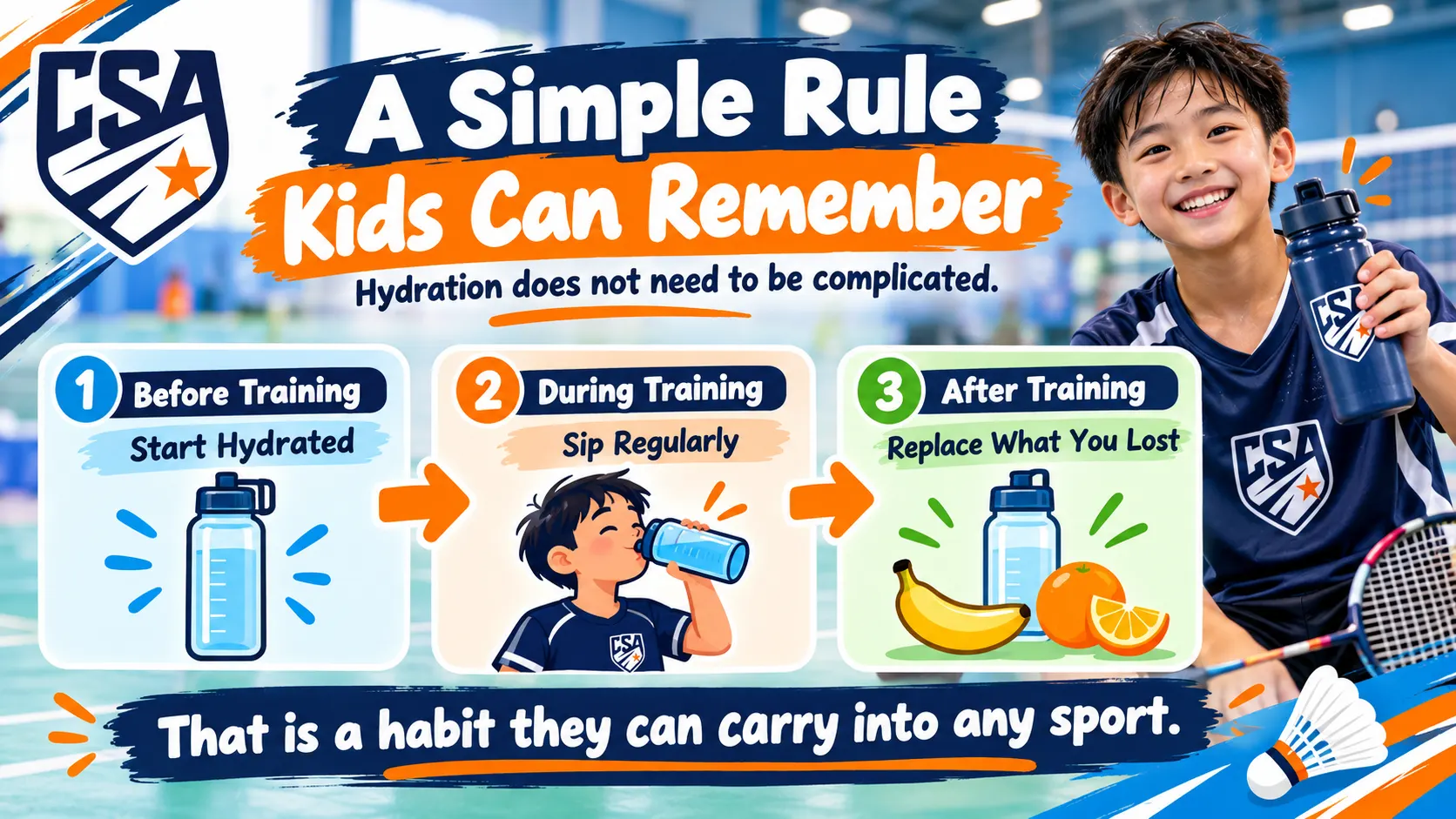
Hydration does not need to be complicated.
Teach children:
Before Training
Start Hydrated
During Training
Sip Regularly
After Training
Replace What You Lost
That is a habit they can carry into any sport.
The Best Hydration Habit Is Consistency
Parents do not need to measure every sip.
The bigger goal is to make water a normal part of the child’s day.
Keep a bottle nearby.
Send one to school.
Bring one to training.
Refill it when needed.
Small habits repeated every day are more useful than suddenly drinking a lot only when training begins.
At CSA, we see hydration as part of the complete athlete-development cycle:
Fuel → Hydrate → Train → Recover → Sleep → Grow
Every part supports the next.
Coming Next
Part 4 — Protein for Growing Athletes
In the next article, we will look at:
- Why young athletes need protein
- How much protein may be enough
- Best Indian protein sources
- Protein before vs after training
- Vegetarian protein options
- Whether kids need protein powder
- Common protein mistakes parents should avoid
Helpful CSA Health Tool
Water Intake Calculator
https://csa.club/health-calculators/water-intake
This calculator provides a general educational estimate. Individual needs can vary depending on age, development, weather, training load, health and sweat rate.
This article is intended for general educational purposes and is not individual medical advice. Children with medical conditions, recurrent dehydration, dizziness, heat-related symptoms or specific dietary needs should receive guidance from an appropriately qualified healthcare professional.
Explore CSA: Health calculators · Water intake · Protein intake · Youth badminton training
Recommended For You

Health & Nutrition
What Should Kids Eat Before & After Sports Training?
Help young athletes fuel training and recover better with simple food choices and smart timing. This guide covers what kids can eat before and after sports, with practical Indian meal and snack ideas for morning, evening and heavier training days.
Oct 11, 2026

Health & Nutrition
Nutrition Basics for Young Athletes
Good nutrition helps young athletes grow, train, recover and perform at their best. In Part 1 of our Health & Nutrition for Young Athletes series, we cover the basics of balanced meals, protein, hydration, meal timing, recovery and healthy habits for growing children.
Oct 4, 2026

Why We Exist
Why We Exist
CSA was built to make youth sports development more transparent, structured, and meaningful. Starting with badminton but designed with a broader multi-sport vision, we bring coaches, kids, and parents together to track real progress across technical skills, tactical understanding, mental strength, physical fitness, performance, and long-term growth.
Oct 4, 2026