What Should Kids Eat Before & After Sports Training?
By Sravan · October 11, 2026 · 6 min read
Health & Nutrition for Young Athletes · Part 2
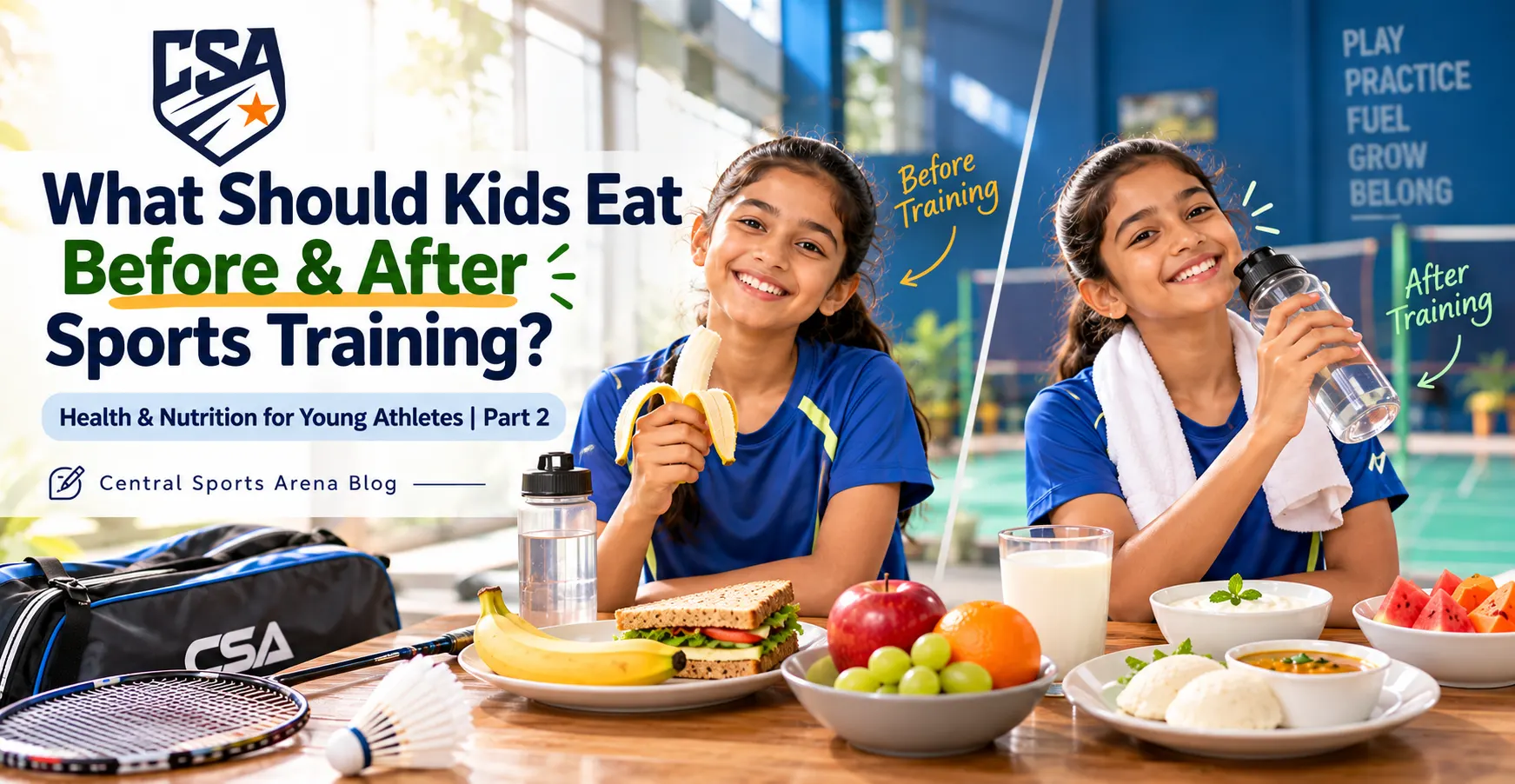
Health & Nutrition for Young Athletes — Part 2
A common question parents ask is:
“What should my child eat before training?”
And just as importantly:
“What should they eat after training?”
For young athletes, food around training does not need to be complicated.
The goal is simple:
Before training → give the body energy
After training → help the body recover
The right food and timing can help children feel more energetic, stay focused and recover better.
Why Food Timing Matters
A child who comes to training after a long gap without food may feel tired, hungry, slow or less focused.
That does not always mean they are not interested in training.
Sometimes they simply need better preparation before they step onto the court or field.
A useful rule for parents is:
Do not regularly send a child into a demanding training session completely hungry.
What Should Kids Eat Before Training?
Before training, the aim is to provide energy without making the child feel too full or uncomfortable.
Carbohydrate-rich foods are useful because they help provide energy for activity.
2–3 Hours Before Training
If there is enough time, a normal balanced meal can work well.
Examples:
- Rice + dal + vegetables + curd
- Chapati + paneer + vegetables
- Idli + sambar + egg
- Dosa + egg
- Rice + chicken + vegetables
The meal should be filling, but not excessively heavy.
60–90 Minutes Before Training
Choose something lighter.
Examples:
- Banana + curd
- Idli
- Small bowl of poha
- Fruit + yogurt
- Toast + egg
- Small homemade sandwich
- Chapati roll
20–45 Minutes Before Training
If training is starting soon, keep it simple.
Examples:
- Banana
- A few dates
- Toast
- Small fruit portion
- A few raisins
This is usually not the best time for a large meal.
Morning Training: Keep It Simple
Children training early in the morning may not feel hungry immediately after waking up.
A small snack before training may be enough.
Examples:
- Banana
- A couple of dates
- Toast
- Small glass of milk, if tolerated
- Half or one idli
After training, follow it with a proper breakfast.
Good post-training breakfast options include:
- Idli + sambar + eggs
- Dosa + egg + fruit
- Poha + peanuts + milk
- Oats + milk + fruit
- Chapati + egg or paneer
Think:
Energy + Protein + Fluids
Evening Training: Plan Around School
Evening sessions can be challenging because the gap between lunch and training may become long.
A planned snack 60–90 minutes before training can help.
Good options include:
- Banana + curd
- Idli
- Poha
- Fruit + yogurt
- Egg sandwich
- Paneer sandwich
- Milk + banana
- Roasted chana + fruit
Simple home food is usually enough.
Try not to depend on packaged snacks every day just because they are convenient.
What Should Kids Eat After Training?
After training, focus on:
Fluids + Energy + Protein
If Dinner Is Within an Hour
A normal balanced dinner may be enough.
Examples:
- Rice + dal + vegetables + curd
- Chapati + paneer
- Rice + egg curry
- Rice + chicken or fish + vegetables
- Dosa + egg + sambar
- Khichdi + curd
If Dinner Is Still 1–2 Hours Away
A small recovery snack can help.
Examples:
- Milk + banana
- Curd + fruit
- Boiled eggs + fruit
- Paneer sandwich
- Egg sandwich
- Yogurt + banana
- Roasted chana + fruit
The aim is not to give another large meal.
It is simply to help the child recover until dinner.
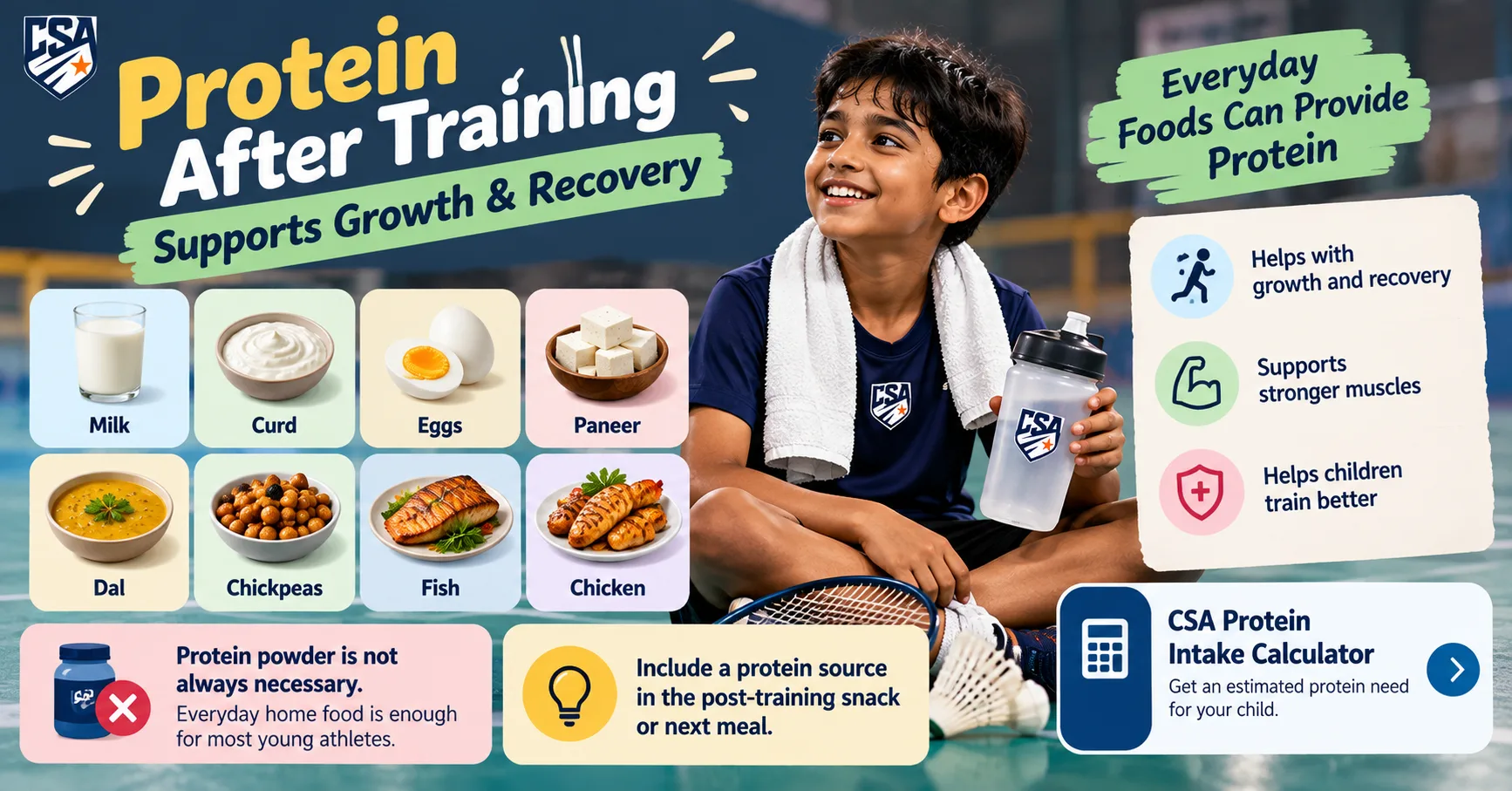
Protein After Training
Protein supports growth and recovery.
Everyday foods such as milk, curd, eggs, paneer, dal, chickpeas, fish and chicken can provide protein.
Children do not automatically need protein powder after every training session.
A good habit is simply to include a protein source in the post-training snack or next meal.
Explore Estimated Protein Needs
CSA Protein Intake Calculator
https://csa.club/health-calculators/protein-intake
This should be treated as a general educational estimate, especially for growing children.
Don’t Forget Water
Food gets a lot of attention, but hydration matters too.
A simple routine is:
Before training → Drink
During training → Sip regularly
After training → Rehydrate
We will cover hydration in much more detail in Part 3.
Estimate Daily Water Needs
CSA Water Intake Calculator
https://csa.club/health-calculators/water-intake
What About Heavier Training Days?
Some days are more demanding than others.
For example:
- Longer training sessions
- Morning + evening training
- Tournament days
- Multiple matches
On these days, children may need more food and fluids than usual.
That may mean:
- Slightly larger meals
- One additional snack
- More fluids
- Better recovery meals
- Enough sleep
If a child trains twice in one day, recovery between sessions becomes especially important.
A simple example:
Before morning training: Banana
After morning training: Idli + eggs + milk
Lunch: Rice + dal + vegetables + curd
Before evening training: Fruit + yogurt or sandwich
After evening training: Balanced dinner
The principle is simple:
Fuel → Train → Recover → Fuel Again
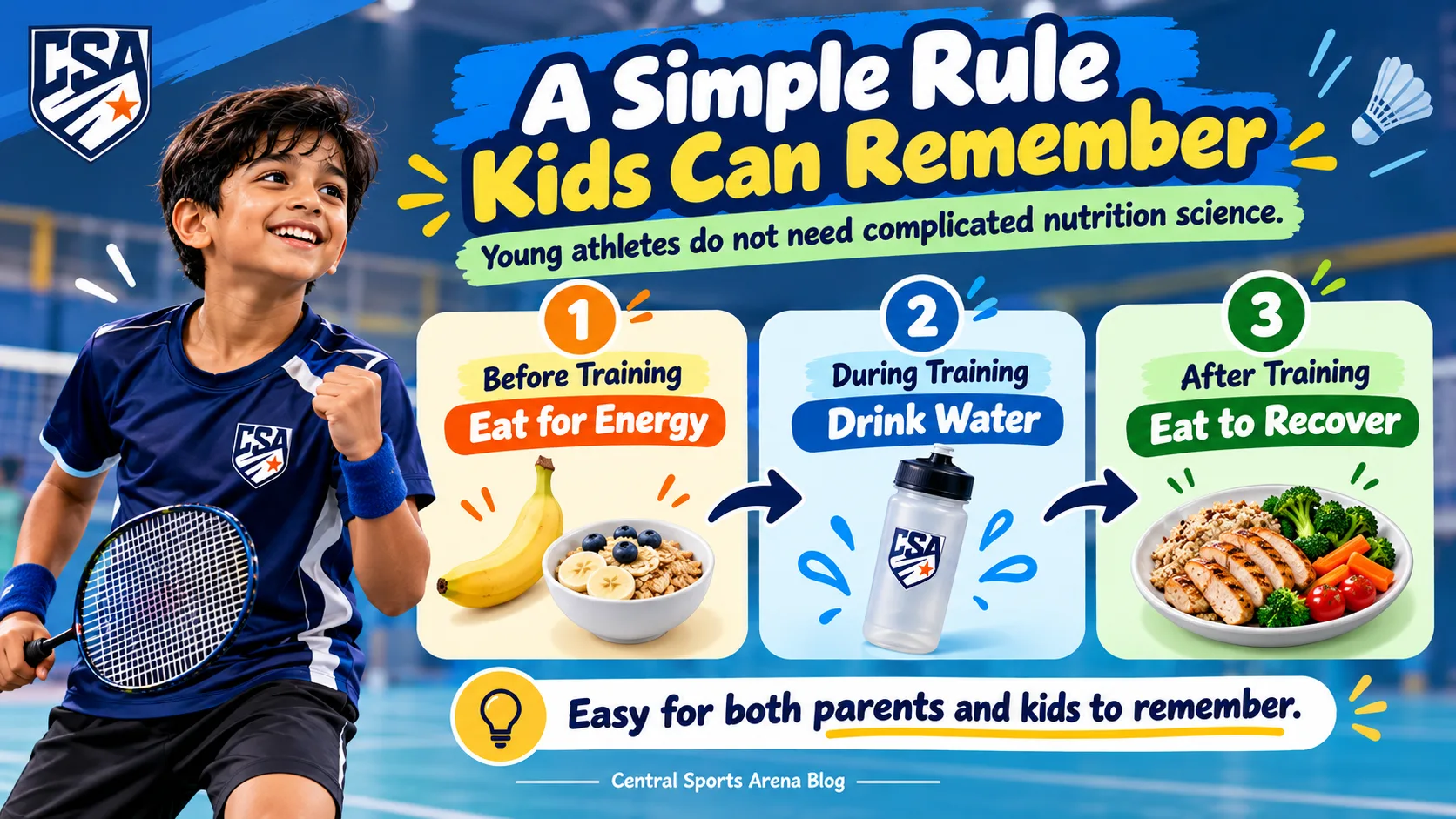
A Simple Rule Kids Can Remember
Young athletes do not need complicated nutrition science.
Teach them this:
Before Training
Eat for Energy
During Training
Drink Water
After Training
Eat to Recover
That is easy for both parents and kids to remember.
Food Should Support Training — Not Become Pressure
Parents naturally want the best for their children.
But nutrition should not become another source of pressure.
Instead of constantly saying:
“You must eat this because you are an athlete.”
Help children understand:
- Food gives them energy
- Water helps them train
- Recovery food helps the body recover
- Sleep helps them grow and improve
The long-term goal is to help children learn how to look after themselves.
Building Better Training Habits
At CSA, we believe training quality depends on more than what happens during the coaching session.
Good habits outside training matter too.
A simple cycle is:
Eat → Hydrate → Train → Recover → Sleep → Repeat
Parents do not need complicated meal plans.
Start with regular meals, simple snacks, enough water and consistent recovery habits.
Small improvements, repeated consistently, can make a meaningful difference over time.
Coming Next
Part 3 — Hydration for Young Athletes
In the next article, we will look at:
- How much water children may need
- What to drink before, during and after training
- Signs of dehydration
- When electrolytes may help
- Sports drinks vs water
- Hot-weather training
- Tournament-day hydration
Helpful CSA Health Tools
Water Intake Calculator
https://csa.club/health-calculators/water-intake
Protein Intake Calculator
https://csa.club/health-calculators/protein-intake
These calculators provide general educational estimates. Children are still growing, so individual requirements can vary depending on age, development, health and training load.
This article is intended for general educational purposes and is not individual medical or nutritional advice. Children with allergies, medical conditions, digestive concerns, growth issues or specific dietary requirements should receive guidance from an appropriately qualified healthcare or nutrition professional.
Explore CSA: Health calculators · Water intake · Protein intake · Youth badminton training
Recommended For You
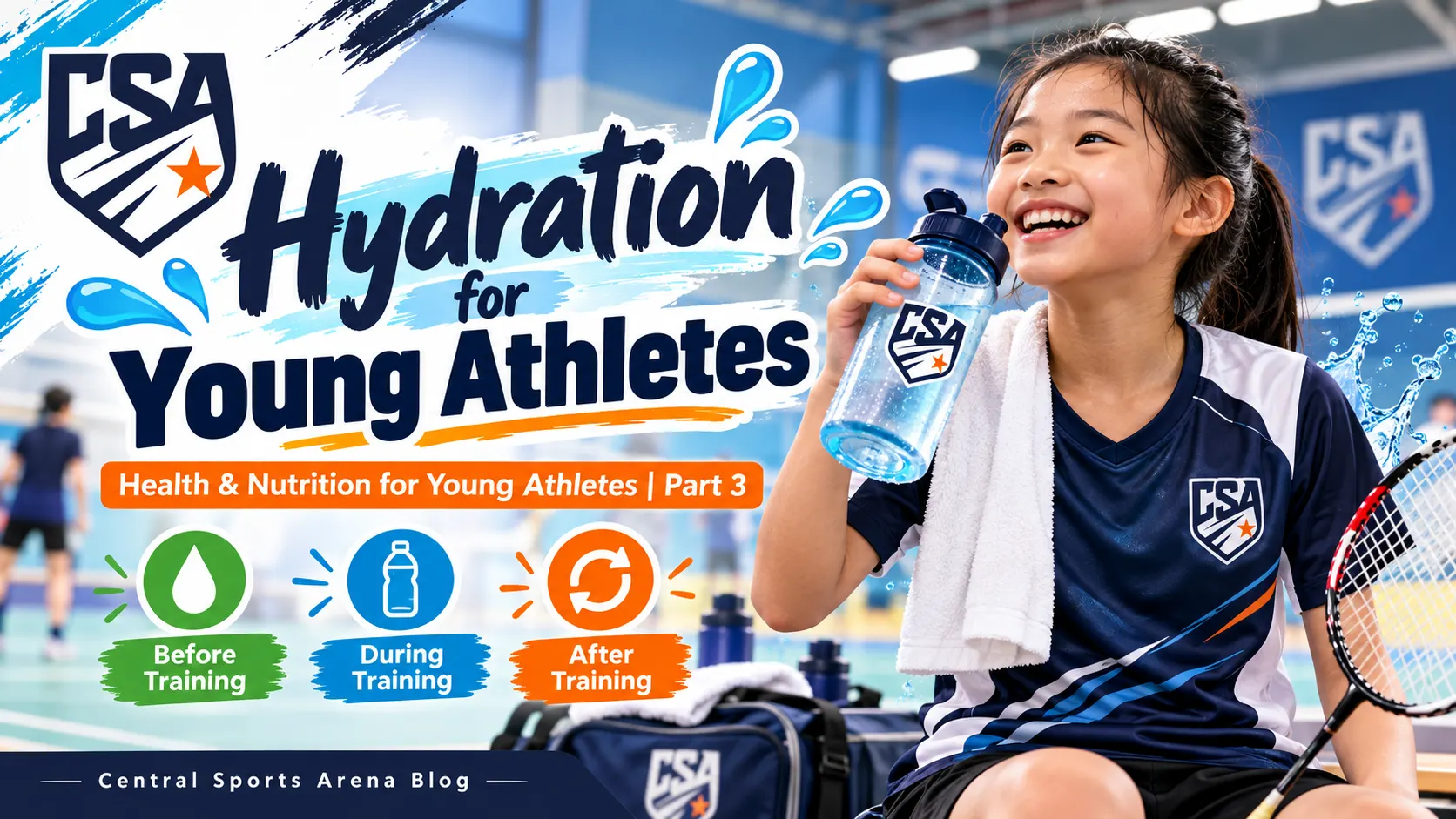
Health & Nutrition
Hydration for Young Athletes
Learn how to keep young athletes properly hydrated before, during and after training. Part 3 covers daily water needs, signs of dehydration, electrolytes, sports drinks, hot-weather training and simple tournament-day hydration habits.
Oct 17, 2026
Health & Nutrition
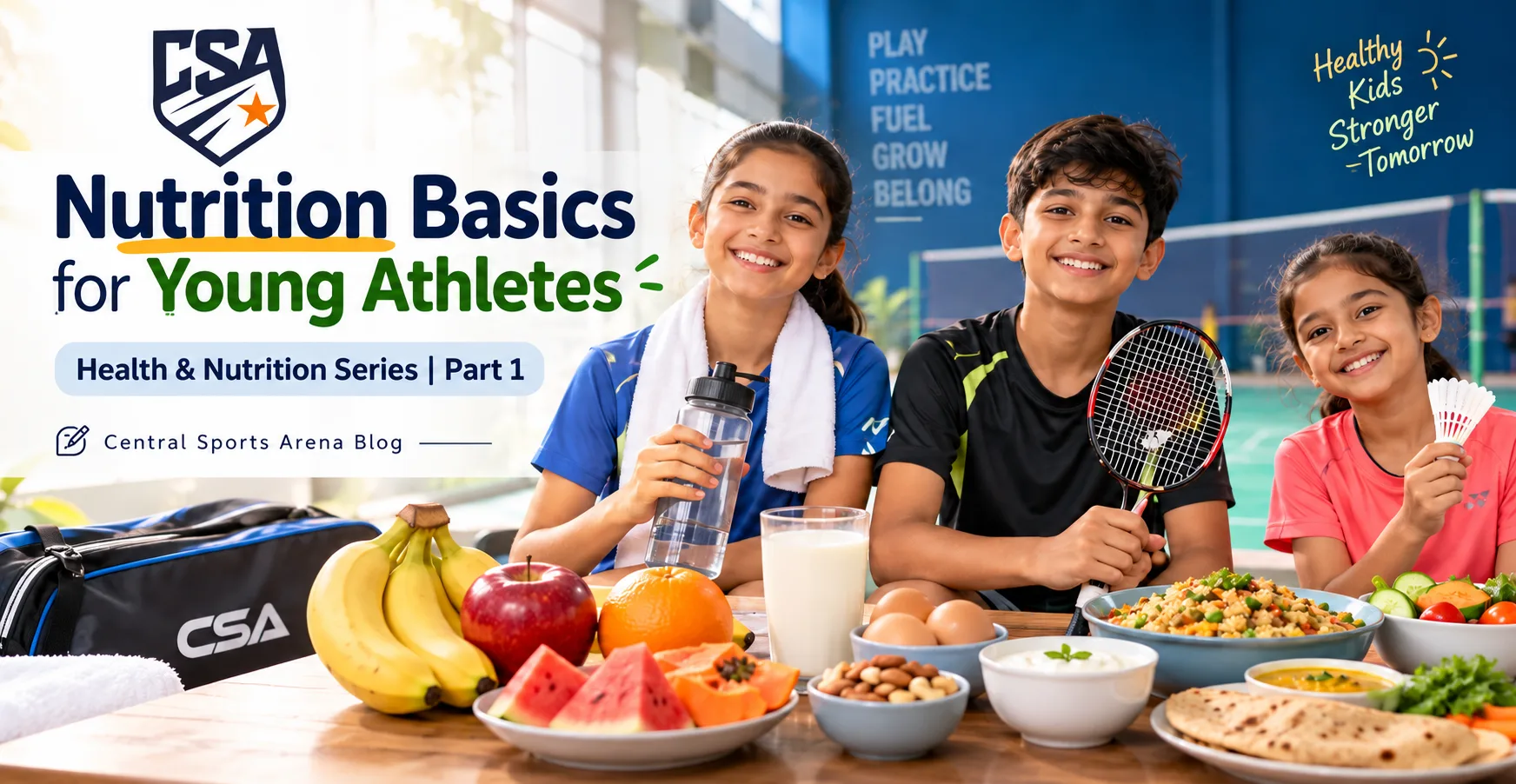
Nutrition Basics for Young Athletes
Good nutrition helps young athletes grow, train, recover and perform at their best. In Part 1 of our Health & Nutrition for Young Athletes series, we cover the basics of balanced meals, protein, hydration, meal timing, recovery and healthy habits for growing children.
Oct 4, 2026

Why We Exist
Why We Exist
CSA was built to make youth sports development more transparent, structured, and meaningful. Starting with badminton but designed with a broader multi-sport vision, we bring coaches, kids, and parents together to track real progress across technical skills, tactical understanding, mental strength, physical fitness, performance, and long-term growth.
Oct 4, 2026